Drogmi Buddhist Institute

The Wisdom Age Blog

News from Drogmi Buddhist Institute
The Wisdom Age Blog includes articles from The Wisdom Age newsletter
  • Home
  • About DBI
    • History of Drogmi Buddhist Institute
    • Khenpo Ngawang Dhamchoe
    • Photo gallery
    • Contact
  • About Sakya
    • The Sakya lineage
    • The five Sakya founders
    • Sakya Masters
    • Throneholders of Sakya
    • Lam Dre
  • Courses & events
  • Resources
    • Past teachings
    • Meditation guides
    • Prayers
    • Shrine room etiquette
    • Dharma links and resources
    • Request for Prayers
  • Support us
  • Wisdom Age
  • Retreat Hut / Venue hire

1/2/2024

The Four Immeasurables: Equanimity

Read Now
 

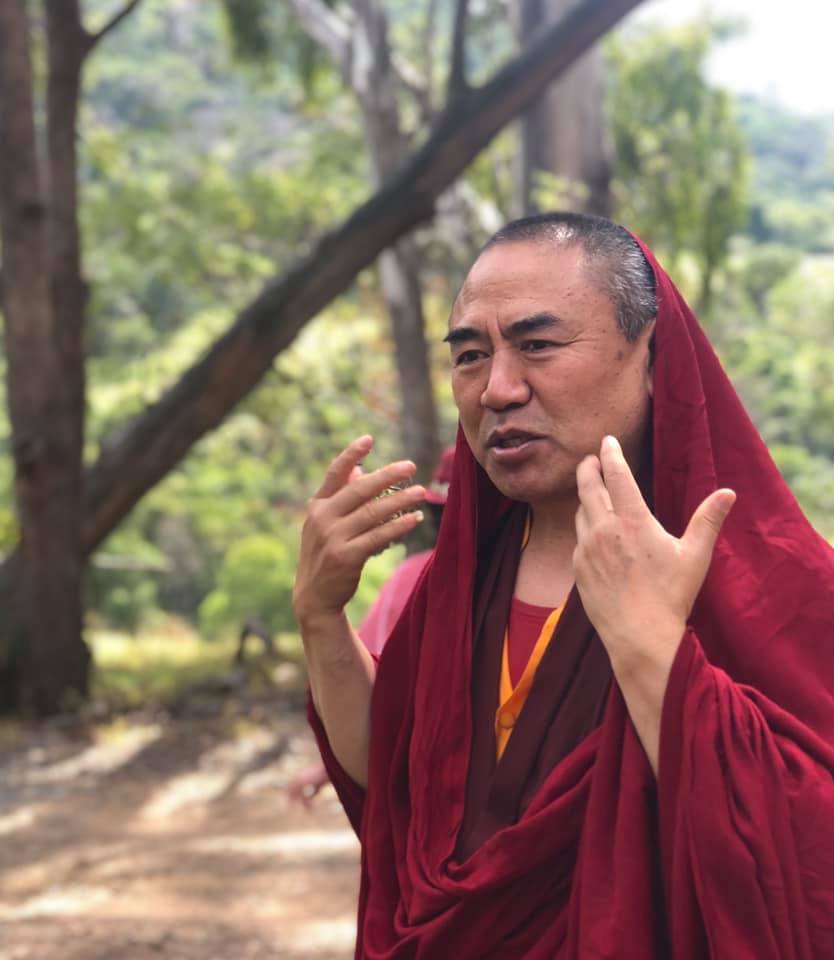
teaching by khenpo ngawang dhamchoe
Excerpt from The Mahayana Booklets of the Autumn Buddhist Philosophy Course

Picture
If we meditate on equanimity just because we Buddhists believe every being is equal, that is not good enough. We need to understand the reason that every being is equal. This can be explained: first, from the relationship point of view; second, the sentient beings’ interest point of view; third, the dharmic point of view.

Equanimity: from the relationship point of view

First, the relationship point of view. In our normal life, we do not see everyone as equal because someone is our partner, some you dislike and there are others who are strangers to you. In meditation, you consider these relationships as only temporary – in your past lives, these people had different relationships with you, and in your future lives they will have different relationships with you. Your loved ones, your enemies and strangers are always in flux – always changing. In one life, your loved one may become your enemy. In this sense, there is no real, fixed differences.

One of the sutras describes a mother, holding a baby, eating meat, and beating a dog. The point is that the meat she is eating has been her father in a previous life, the dog she is beating has been her mother, the baby she is holding has been her enemy. Now, her enemy becomes her child, her mother becomes her enemy who she beats up, and her father becomes her food. Dharma opens our eyes, so we are able to see the past, present and future. When we understand this, we will not be caught up with small things. So, from the relationship point of view, we are all equal. This is logical.

Equanimity: from the sentient beings’ interest point of view

From the viewpoint of sentient beings’ interest, every one of them wants to be happy; none of them wants unhappiness. So, you and all sentient beings are the same in this regard. Think, then, what is the difference – between me and others, between enemies, strangers, friends? They all want the same thing – happiness. Once you accept this logic, implement it in your mind and change your view of others, you will be able to see everyone as equal. This will help you achieve equanimity. Ask yourself if you have the right reasons to love someone, to dislike someone and so on; do you like or dislike someone for the right reasons?

Buddha did not tell people to just believe what he said: Buddha spoke truth with reason. The reason is right in front of us, so let us use the reason to prove what we think is true. We realise that we do not have right reasons for liking some and disliking others. We just feel close to someone, label those who we do not know as strangers, and label those who do not like as enemies. But the moment an enemy does good things to us, we change our mind, and the person becomes our friend. From the sentient beings’ interest, we are equal.

Equanimity: from the dharmic point of view

From the dharmic point of view, there is no reason that your loved ones give you an opportunity to gain enlightenment and your enemy does not. They equally give you opportunities to gain enlightenment. A beggar gives you an opportunity to practise the Perfection of Generosity; enemies give us opportunities to practise the Perfection of Wisdom. Without them, we cannot practise the Six Paramitas. From that point of view, how can we think they are different? In terms of our practise of loving kindness and compassion, they are also equally as important. If we miss one sentient being, then our loving kindness is not complete. All these reasons are so important to implement in our mind. They change our view of sentient beings. They contribute to our equanimity.

Once we see, or feel, that everyone is equal, then our practise of loving kindness becomes much easier. We will not have divisive thoughts, because we understand that we are all the same. Then, why not think about all sentient beings? When we say, ‘may all beings have happiness,’ what we mean is ‘may all beings have truly virtuous minds’ because the happiness that comes from having a virtuous mind is the true happiness. Other happiness is false happiness that brings desire, disappointment, anger, and other negative things. Virtues do not bring negative things. We wish all beings to not just dwell in the virtuous state but also accumulate virtues consistently. The more virtues they get, the happier they become. This is what we call loving kindness. Wishing them to have a good holiday on the beach is not loving kindness. They may enjoy their holiday today, and tomorrow they want to go again but then worry about losing their job if they stay at the beach. That is not real happiness; the real happiness is a virtuous mind and virtuous activities.

Then, we wish sentient beings to be free from suffering. Suffering does not mean poverty; even if they are free from poverty, they still have suffering. How many people do we know who are rich and suffering? Suffering comes from non-virtues. This is how we wish them to be free from suffering and the cause of suffering.

Thirdly, all of us, no matter how bad, have some kind of virtues in our life. These virtues, no matter how small, bring some kind of joy. We wish that they never part from that joy. To never part from any joy they have. 
​
These are the four immeasurables. These create a solid foundation for the mind path. They establish a very healthy seed for bodhicitta. For this reason, if you want to have healthy bodhicitta, you must train yourself in the four immeasurable first. Once you have solidly established these four immeasurables, you will be able to cultivate real bodhicitta mind.

Share

1/2/2024

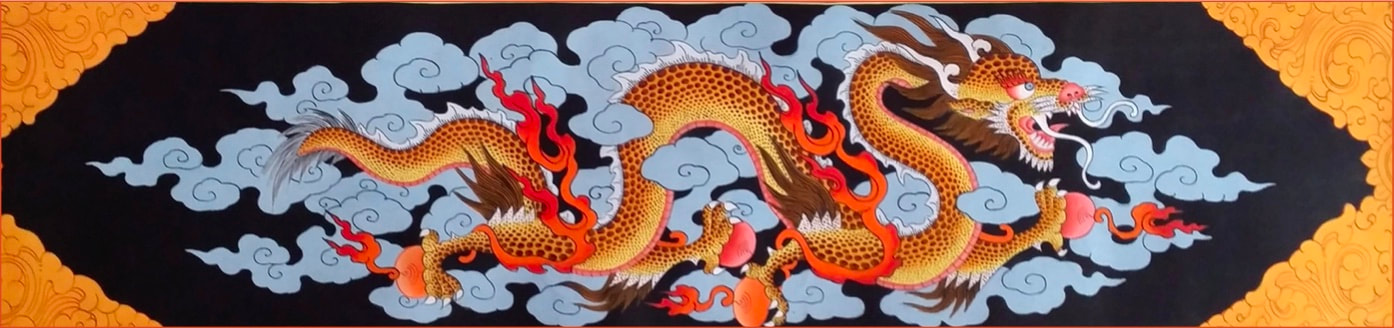
Happy Losar 2151 – the Year of the Wood Dragon

Read Now
 

HAPPY LOSAR 2151 – THE YEAR OF THE WOOD DRAGON
February 2024

Picture
Losar preparation and celebration

Losar is celebrated for 15 days, with the main celebrations on the first three days. A month before the New Year a special kind of barley is planted in little flowerpots so that by the time New Year rolls around three-inch-high seedlings can be offered to Buddha. Families then prepare for Losar some days in advance by thoroughly cleaning their homes; decorating with fragrant flowers; painting their walls in flour with auspicious signs such as the sun, moon, or a reversed swastika; and preparing cedar, rhododendron, and juniper branches as incense for burning. Debts are settled, quarrels are resolved, and new clothes are acquired. 

Guthor – the last two days of the year

In English guthor means “banishing the evil spirits festival”. The day before New Year’s Eve, the kitchen is thoroughly cleaned because it is where the family prepares food and is considered the most important part of a house. Here, special foods are made such as kapse (fried twists) and guthuk (a form of the traditional Tibetan soup, thukpa).

On this night, families and friends gather to eat guthuk and perform the rituals for driving out all negative forces of the old year. Guthuk is made from meat, rice, sweet potatoes, wheat, yak cheese, peas, green peppers, vermicelli, and radishes, and is served with small dumplings akin to fortune cookies that contain hidden ingredients, some in the form of words on paper, all of which symbolise human qualities or the diner’s New Year fortune. 

The dumplings are not eaten but discarded after their contents are revealed. When eating guthuk, Tibetan families discuss their luck for the New Year. The atmosphere is bright and very lively.

After eating guthuk (ensuring some is left over), leftover dough is formed into an effigy representing an evil entity called lue. One member of the family carrying a lighted torch goes from room to room demanding that the spirits of the old year dwelling in nooks and corners to leave. Another person follows with a broom and sweeps the rooms, emptying the dust into a container with the leftover guthuk and the lue. In this way, our body, spirit and living spaces are cleansed of the negativities of the old year and the lue is taken outside. As the lue leaves the house, firecrackers are set off after it and the lue is commanded to take away all the obstacles and negativities of the year. 

In the Potala palace of Lhasa and other places, a grand sorcerer’s dance is held to keep away evil spirits. Monks and people in all places put on masks and clothes, imitating demons and spirits, singing, dancing, lighting firecrackers and shouting to bid farewell to the outgoing year and welcome the coming New Year.

On the second day of guthor, New Year’s Eve, religious ceremonies are performed, people visit the monastery to worship and donate money and gifts to the monks. 

Losar – first day of the New Year
​
The New Year begins on the day of a new moon that marks the first day of the first month on the Tibetan calendar. It is called Gyalpo Losar in Tibetan means “King’s New Year”. People dress up in their best clothes, greet each other and go to the monasteries to receive blessings, as the festivities last from the 1st day of the New Year until the 15th day. 

Share

18/1/2024

Impromptu Working Bee

Read Now
 

HELD AT KAMALASHILA TIBETAN BUDDHIST CENTRE
January 2024

Picture
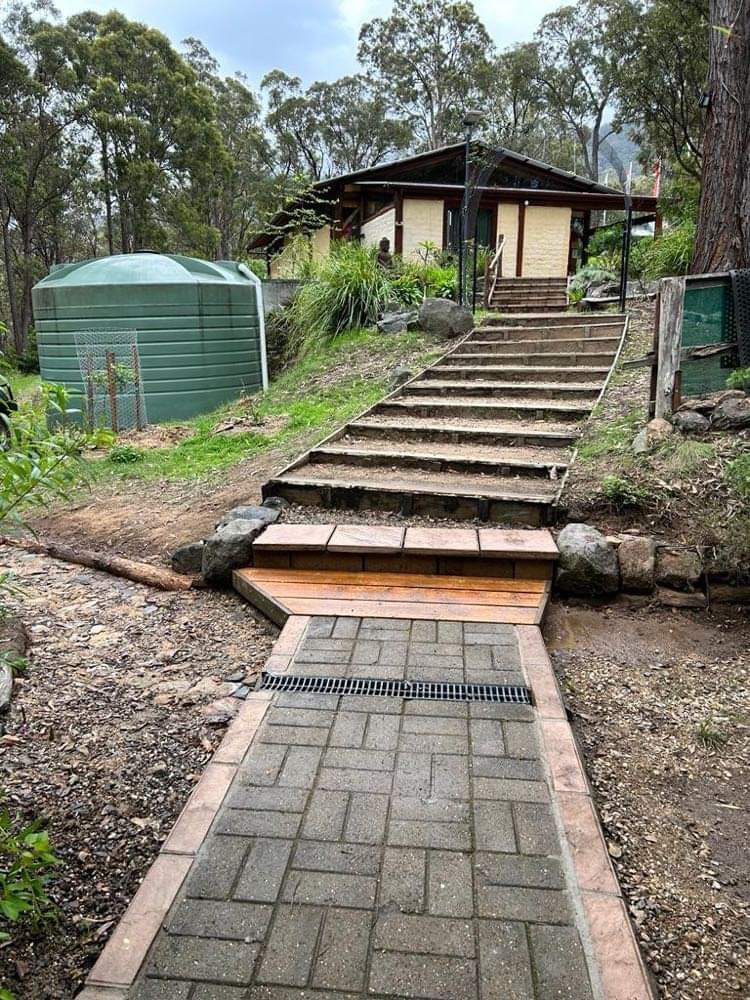
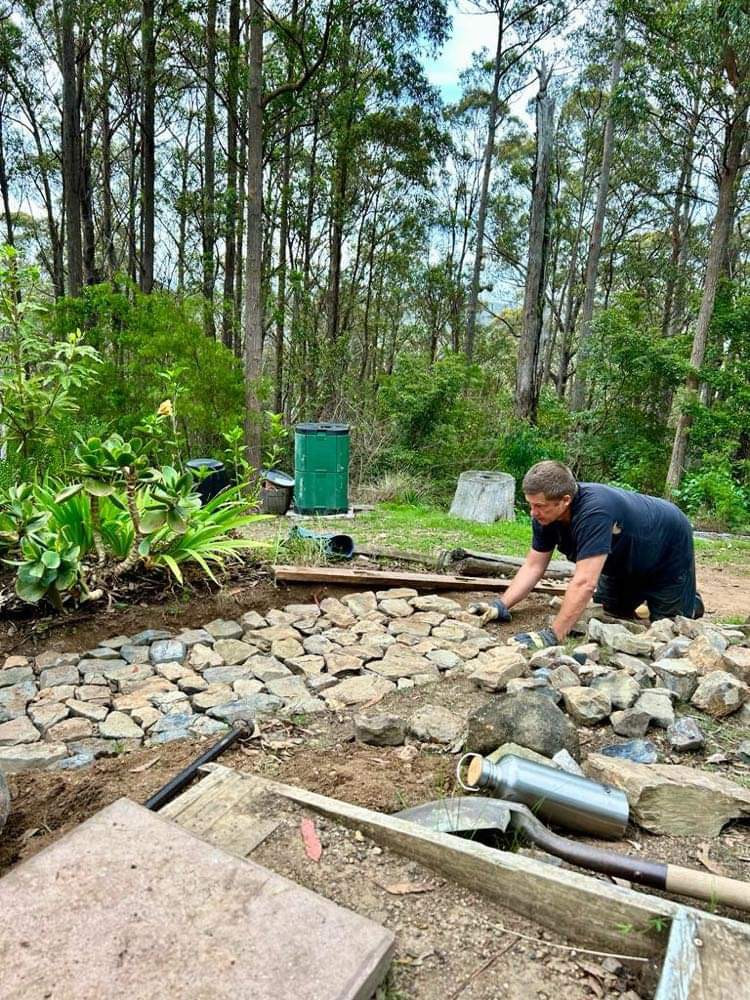
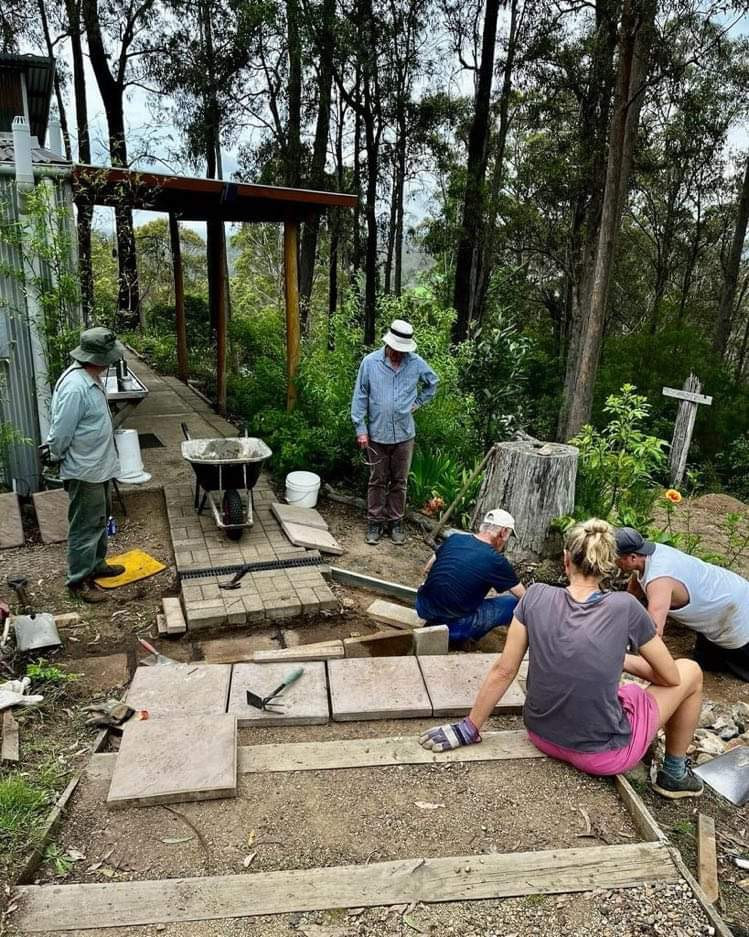
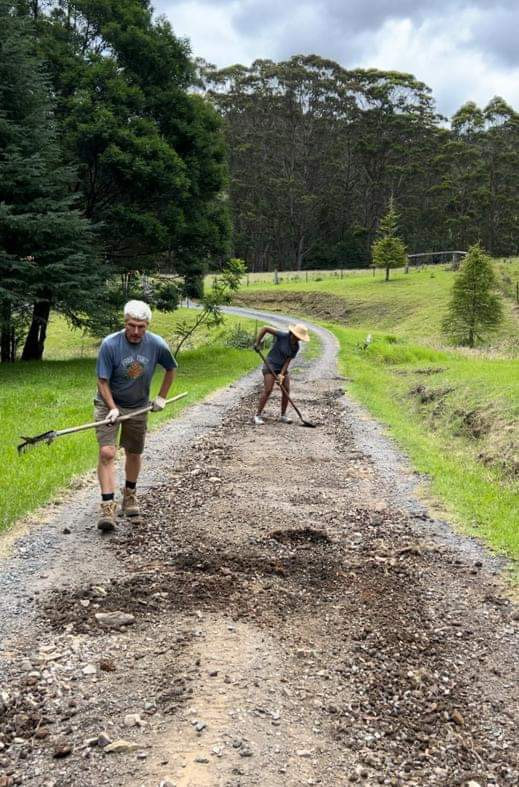
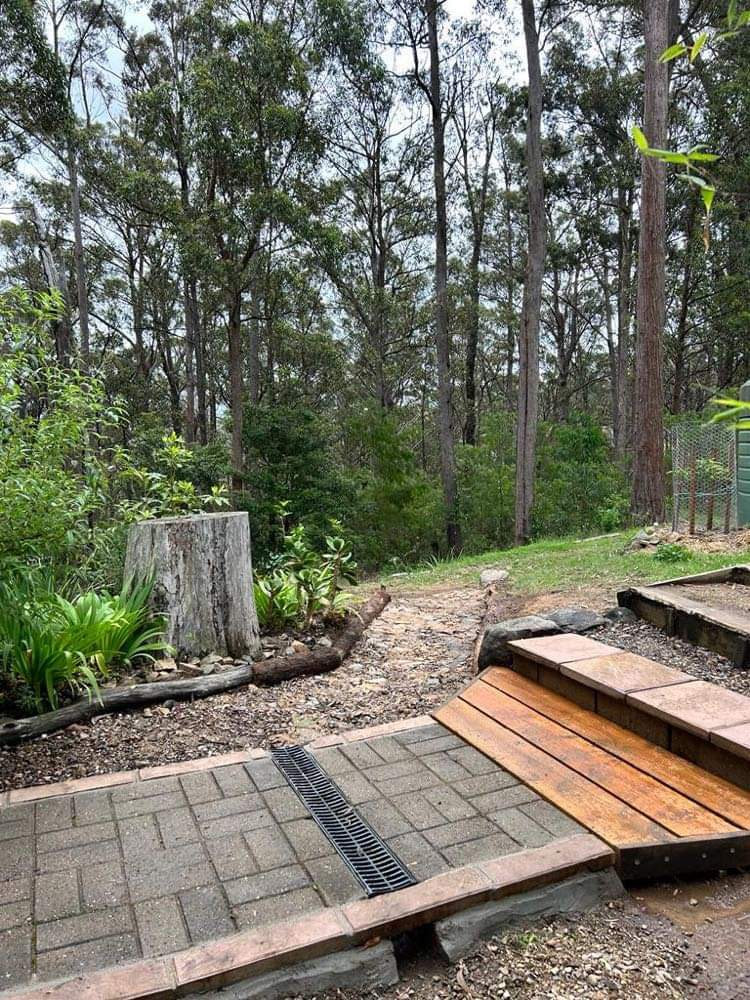
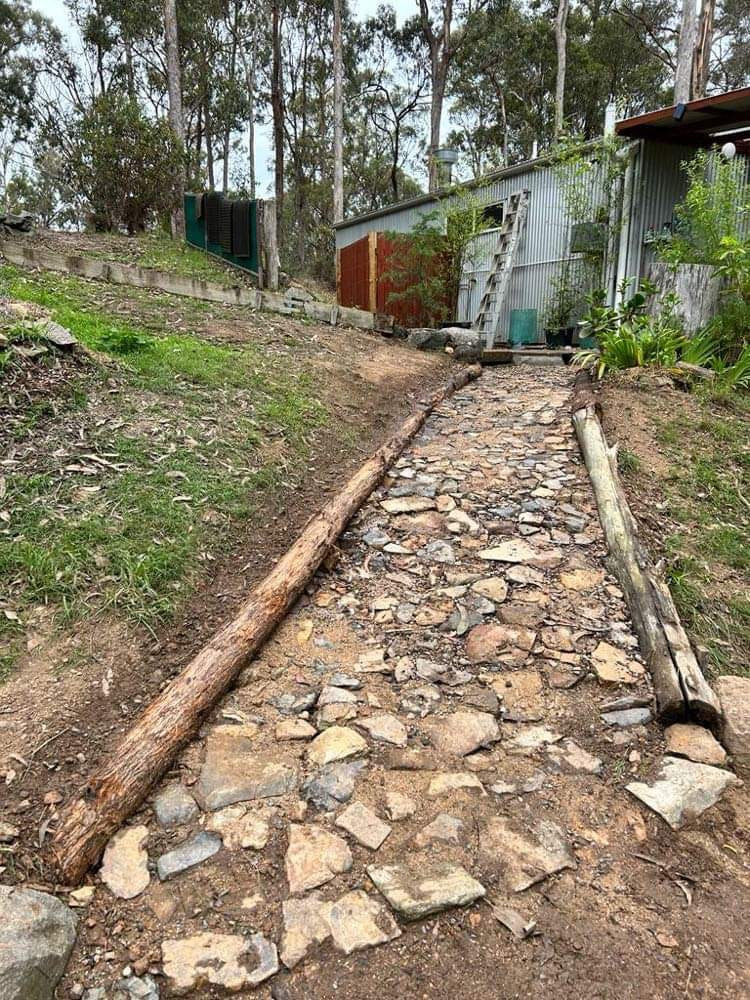
Over the holiday season, after the conclusion of the Healing & Purification Retreat one our sangha members, Rob planned a bit of an impromptu working bee. Together with Peter T., Tony, Oli, Phil, Kate and Milhara, they all worked very hard on finishing the repairs to the stairs and pathway leading to the dining room, as well as creating a new pebble pathway in a rough and hilly section nearby. 
​
A big thank you to everyone who helped make this happen and thank you Kate for all the images. When you visit DBI’s Facebook page, you’ll see Kate’s fabulous little film clip recording the working venture! Well done All.

Share

18/1/2024

Audiences and Empowerments in Bodhgaya

Read Now
 

AUDIENCES AND EMPOWERMENTS IN BODHGAYA
​January 2024

Picture
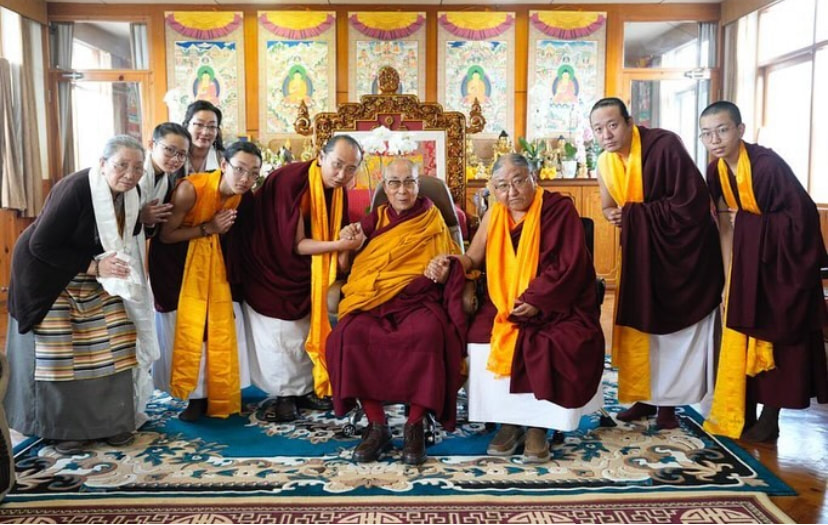
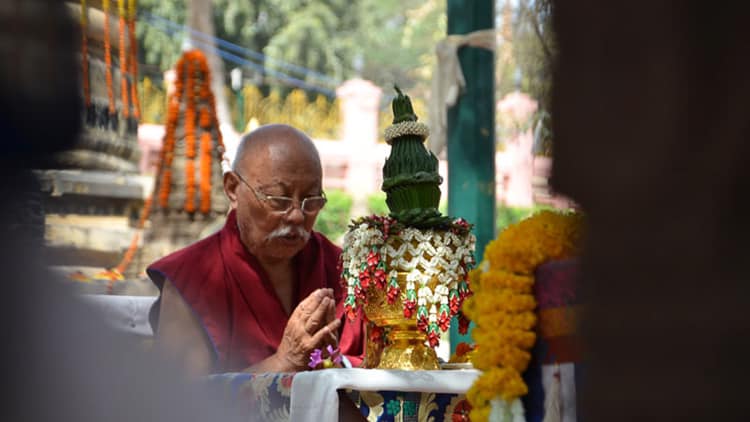
Photographs captured by The Private Office of The Dalai Lama during the private audience between His Holiness the Great 14th Dalai Lama and Kyabgon Sakya Gongma Trichen Dorjichang, the 42nd Sakya Trizin, the 43rd Sakya Trizin, Dungsey Akasha Vajra Rinpoche, Jetsunma Kunga Trinley Palter, Jetsunma Kunga Chimey Wangmo, Gyalyum Tashi Lhakee, Dagmo Kalden Sakya, and attendants of Kyabgon Sakya Gongma Rinpoche recently in early 2024 in Bodhgaya.
​While the empowerments and transmissions at the Bodhgaya Sakya Monastery Triyana Dharma Chakra Vihar continue, on this day, the 4th day of the 12th lunar month of the Tibetan calendar, we also commemorate the Parinirvana of one of the greatest Sakya masters of our time, His Eminence Chogye Trichen Rinpoche, the 25th throne holder of the Tsarpa branch of the Sakya school. Images by Jamyang Dorje la.
Some more exquisite images, adorning with a set of Heruka bone ornaments during the Vajramala Empowerments currently bestowed by The 42nd Sakya Trizin Bodhgaya. Amazing photographs from Jamyang Choesang la and Jamyang Dorji la.
We are entirely grateful to share these images from Instagram Pages of @42nd_sakya_trizin and @dagmokalden. Please visit these two pages to view (if possible) more of their magnificent ceremonies and images.

Share

1/1/2024

Annual Healing & Purification Retreat 2023

Read Now
 

HELD AT KAMALASHILA TIBETAN BUDDHIST CENTRE
27 December 2023 - 1 January 2024

Picture
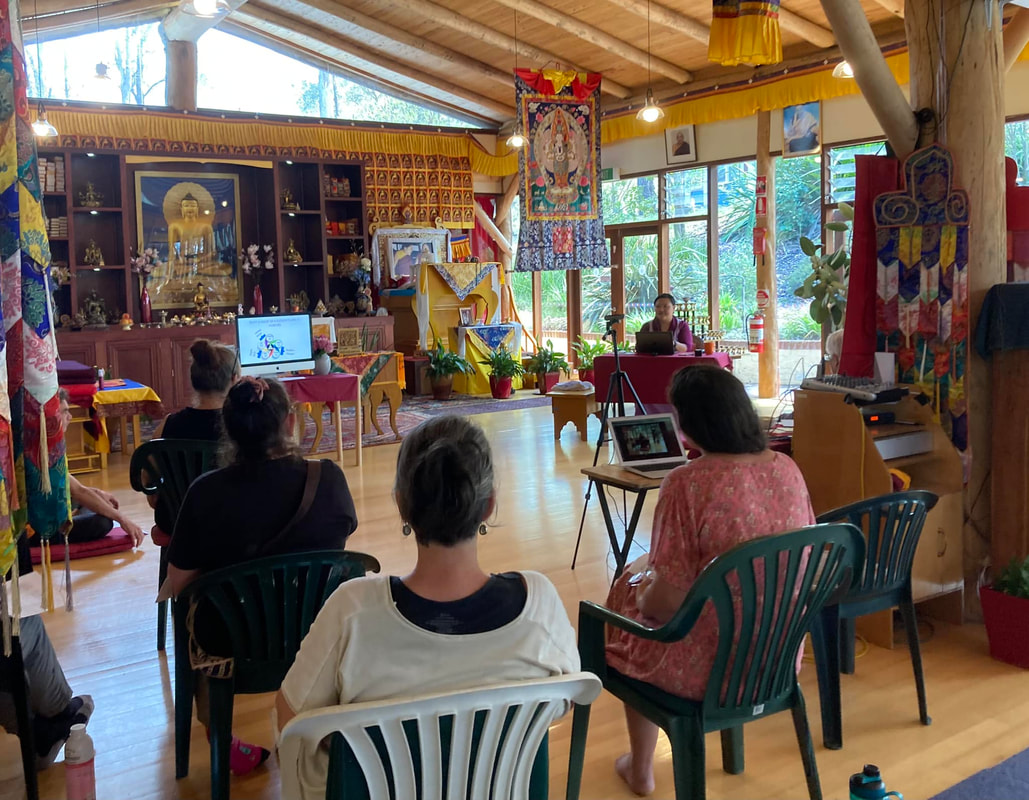
Day 1 of the Annual Healing and Purification retreat commenced with Khenpo la giving the Vajrasattva transmission and providing brief yet detailed teachings to explain the history of the ancient practice and unbroken lineage. Khenpo la explained the benefit and meaning of the visualisation practice ‘to use the mind to heal the mind’ and reminded us that our minds have the same potential as all the previous Buddhas and great masters: we practise polishing the mind and eliminate the negative states, but the nature of mind is always pure and perfect. 
​
On this first afternoon, we all marked the first anniversary of His Eminence Luding Khenchen Rinpoche passing into Mahaparinirvana (according to the western calendar). Khenpo la led the sangha in prayers and light offerings.
Picture
Day 2 of this retreat involved Khenpo la giving more detailed instructions about how to do the Vajrasattva practice (the visualisation and the mantra), the benefits (all actions of body, speech and mind can be purified) and the disadvantages/consequences of not doing the practice (accumulation of negativities like a snowball). Khenpo la emphasised that dharma teachings are practical ways for us to understand our minds, that we must be humble and accept the current unfocused and distracted nature of our beginner minds, and to use our emotions to magnify (turbo boost) our practice. We concluded the day by doing a Vajrasattva group practice to purify our negative actions of 2023 in preparation for the New Year.

Day 3 commenced with Khenpo la giving the Sutrayana transmission of the Medicine Buddha practice. Khenpo la explained the ancient lineage (aeons) of the practice from previous Buddhas to Shakyamuni Buddha and that it led to the flourishing and establishment of the Buddhadharma in Tibet because it was one of the first meditation ritual practices established in Tibet by Shantarakshita in the 8th century. One of the repeated instructions from Khenpo la throughout the retreat has been to focus on the essence of the practice (the meaning and raw feeling), to bring our genuine and ordinary (samsaric) minds to our practice because we have to start with our troubled messy minds to heal, purify and transform our minds with our wisdom mind.

Day 4 involved Khenpo la providing more detailed teachings about the wishes and healing properties of the eight Medicine Buddhas (seven Medicine Buddhas and Shakyamuni Buddha). Khenpo la explained that the Medicine Buddha practice was stronger during degenerative times (our current times) because the suffering of sentient beings was much greater. Throughout the teachings, Khenpo la emphasised that the Buddhadharma provides us with the tools to understand our minds and see ourselves and potential; this is more beneficial than approaching Buddhism as a religion or a cultural ritual. 

Following the teachings and practice sessions, the sangha enjoyed New Year’s Eve celebrations with each other by sharing much laughter, songs, chants, dance, incredible food and the unique (trademark pending) Ani Nyidon’s Fortune Cookies experience!
​
The Healing & Purification Retreat concluded 1 January 2024 after four days of teachings, group practices and Q&A sessions with Khenpo la. Retreat participants were a diverse group encompassing practitioners with many years’ experience to those coming to their very first Buddhadharma retreat. 

Some reflections shared by participants about their experiences

“It was a wonderful oasis of time to stop, reflect and reset. I gained clarity, energy, and insight about what to let go to create a more joyful, loving and compassionate way forward in life.”

“This blind person has been given the glimpses of beauty that lies ahead if I continue to follow this path with its sacred teachings.”

“Wonderful times.”

“The retreat has given me the tools for a strong heart in hard times, and the tools to find clarity in unbearable confusion. We are incredibly fortunate to have a teacher such as Khenpo la.” 

“As the universes that we occupy dawn in the new year, our awareness of so many multitudes of these bubbles that exist also dawns. Very grateful to be smiling.”

“Like a baby bird safe in the comfort of its nest, taking food from the mother, I feel the same. Safe and held in the space of Kamalashila Tibetan Buddhist Centre at the base of the mother mountain (Gulaga). I’m taking what I am being fed with immense gratitude to all involved and all that led me here. Grateful to conclude 2023 and welcome 2024 in awareness, awake, feeling alive, and connected. Leaving this nest, I will take with me the food I have been fed, the teachings and continue to keep the practice alive, to keep planting and spreading seeds. Thank you from my whole heart.” 

“A blessing doing this end of year retreat and so valuable doing this retreat a second time to take my practice deeper. This is an opportunity for me to reset my practice and it was beautiful seeing everyone’s transformation and how much we all received. Thank you in gratitude, Khenpo la.”

“Strange old, new world near the mountain. Old ways meet new questions. New ways search old mysteries. Worn paths can merge with fresh streams.” 

“Is it a mirror?” 

“I feel transformed from this retreat, as well as deep love that has infiltrated my sad being. The power of Kamalashila gives me so much appreciation and gratitude, feeling a new joy lightening my heart and trust that my journey is OK. Our precious teacher Khenpo la, whom I feel is a reincarnation of a Buddha, for his full presence shines love, sweet genuine kindness, embodied in equanimity. The way he responds and treats every being is so powerful, bringing alive the teachings in such a way that is so useful and accessible, this skill is incredible to witness. The sacred setting held by the mother Gulaga Mountain, along with the respect, creativity, and richness of the sangha and the divine food – grown, picked prepared and served with love, my gratitude is shining! Thank you so very much.”

“The beautiful timing of this Healing & Purification retreat was so special. The calm, gentle and knowledgeable way Khenpo la teaches is truly wonderful. Thanking you for letting go of 2023 and welcoming 2024.”

Share

9/12/2023

Tibetan Doctor

Read Now
 

VISIT TO KAMALASHILA TIBETAN BUDDHIST CENTRE
​9 December 2023

Picture
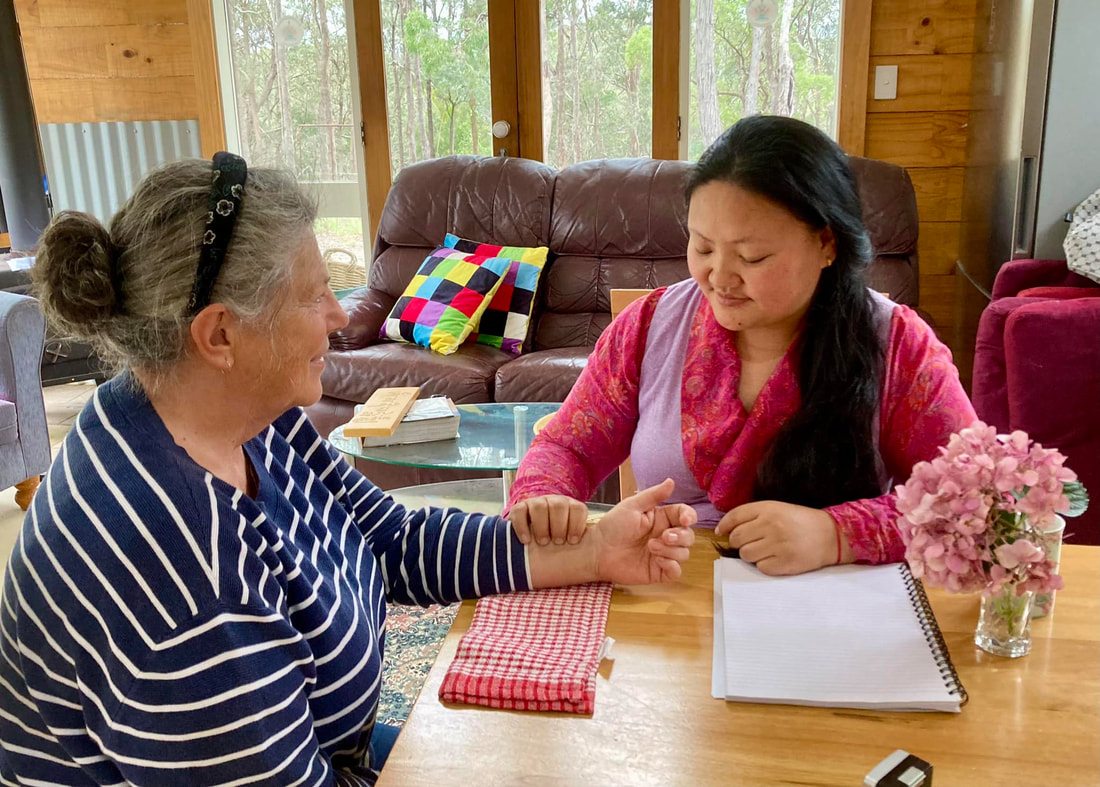
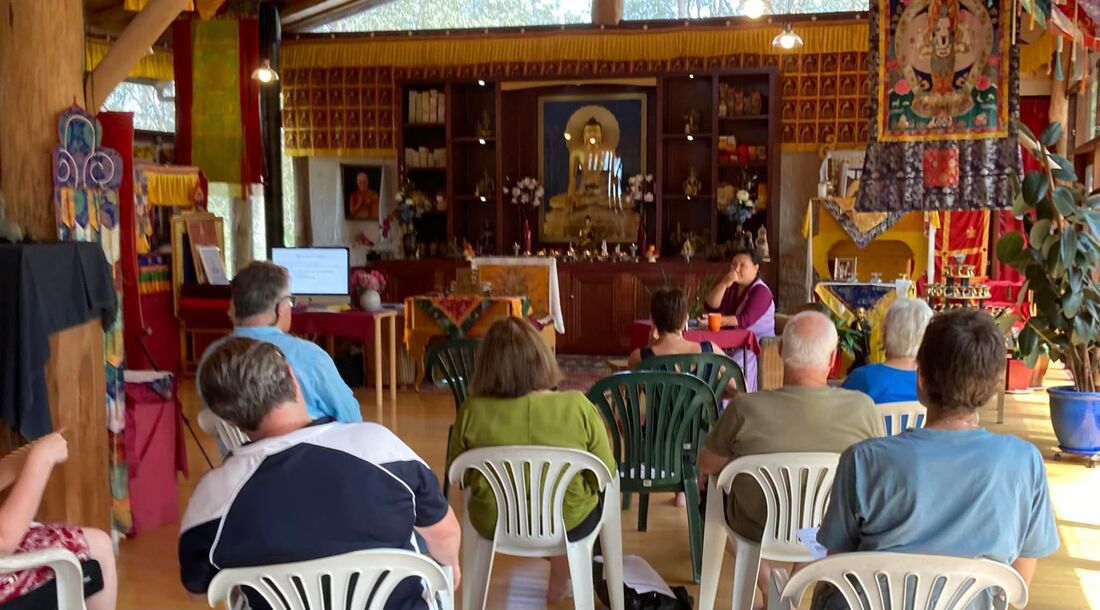
We were pleased to host at KTBC the visiting Tibetan Doctor Amchi Dolma. There was strong interest in her visit within the community, with the public talk and private consultations well-attended. Amchi la gave a talk on the role of Tibetan Medicine in this modern world, describing just how profoundly deep and holistic this ancient, yet so relevant, method of health care is. 

Amchi la talked about stress being the biggest issue in terms of creating disease in our bodies and mind and talked about methods to decrease stress in our lives. Amchi la then conducted a full two days of consultations. She has kindly agreed to return next year.

Please see our Facebook page, https://www.facebook.com/reel/705586974882160, for the part of the public talk and more information on Tibetan Medicine in our modern world.

Share

12/11/2023

Reflections from a Student of the Autumn Buddhist Philosophy Course

Read Now
 

​HELD AT KAMALASHILA TIBETAN BUDDHIST CENTRE
​Second Year, 2024

Picture
In the Dharma slipstream and out of the Dharma slipstream

Out of the Dharma slipstream – samsara. Likened to being in a wild stormy sea that has been whipped up by crazy strong winds.

Being in meditation and contemplation for a few years now, is my refuge. A place of peace away from the hardships of life or as the Buddha might have said ‘all the sufferings’. Suffering of suffering, suffering of change and the all-pervasive suffering.

During times of regular meditation and contemplation on the mind and life, I felt like I was in a port safe from the wild seas of life. During times of longer interaction with the public, not regularly practising, contemplating, and meditating, I felt swept away as if my anchor were ripped up and broken away, and my mind was at the mercy of the wild seas far from the safety of the port of refuge.

Swept far out to sea in the mind of samsara I would do and say wrong things, feel completely sick with suffering but not really understanding why. Just suffering like all the people around me. Due to my sensitive mind, I would suffer and suffer, then in turn others would suffer from my wrong ways too it seemed.

So once the pain was too much to bear, I would steer the mind back to my port of refuge. Safe waters of contemplation and meditation. My karma was not ripe enough to have a great teacher to guide and help me. I would minimalise my contact from outside influences. Stabilise the mind/ship in the safer water of meditation and contemplation. 

Because I would mostly go with the flow, this would get me into a lot of trouble from my troublemaker afflicted mind. Refuge in the harbour of the Buddhadharma was the only safe place to be.

This pattern has gone on in my life for three decades I know it well. Trying to be in this world but not of this world is tricky. This was still an external viewpoint to an ignorant person like me. Thinking the outside world was part of the problem, although not realising that my mind didn’t have the medicine to deal with these problems. Deep in samsara. In the port of the Buddhadharma, refuge was peace and out of the port was the wild wind and seas of the afflicted mind of suffering.

The Dharma slipstream

In the Dharma/The Triple Gem is like being carried along peacefully and effortlessly through life’s ups and downs. Not getting caught up in them just observing them. Just like watching a cloud or a bird fly across the mind’s sky leaving without a trace. 

A dear friend, a Dharma practitioner and now a great Dharma friend, gave me/lent me authentic Mahayana books around seven years ago. Straightaway I could feel the refuge of these books and teachings. My first love of the Mahayana teachings, exchanging oneself for others. 

But as before when I distance this mind just a bit, I could feel the anchor lift and out to sea I would go where the afflicted mind’s winds could whip up the ocean of suffering yet again and again. 

So, for the last seven years I have been wanting to understand why this mind is so much trouble when too much exposure to outside influences would create big negative effects on this mind. 

Attending the Autumn Buddhist Philosophy Course, I found the anchor of the boat/the mind in the safe harbour of the precious Buddhadharma. Peacefully away from the wild seas of emotions and the wild winds of affliction. Yes, the affliction comes up but the Buddhadharma teachings give us prescriptions/medicine/antidotes, the teachings to practise using in the heat of the battle  – our afflictions.

After just finishing the end of our 2nd year of the Course, loving the cool calm water of the precious Buddhadharma teachings, I offer massive thanks to the team of this Course and to Khenpo la’s skilful means of teaching the precious Buddhadharma.

I went to an old friend’s party recently, I did not drink, it was good night. I also watched a powerful documentary called ‘Seaspiracy’. Still doing my formal practice yet this little amount of exposure I felt the anchor ever so slightly lifting and the mind/ boat slowly moving out to sea again. To be exposed to the afflicted mind’s torment, the wild winds that whip up the ocean turbulent waves of suffering is ever present, so it is very clear to keep on this precious path of the Buddhadharma. 

Shortly after this whilst driving my car to the shop, I was contemplating why could I feel this mind moving off its mooring in the safe harbour of the Mahayana. As I was driving, there it was, the realisation of what Khenpo la’s been saying for as long I have listened to this great master. I was around so much self-clinging, that self-clinging started to rub off a bit, and my own self-clinging mind lifted the anchor up, as my mind started to drift out to the samsaric seas once again. Wow, I see this as clear as day, self-clinging is the poison that takes one’s mind out of the safe harbour of the Triple Gem’s refuge.

This realisation is the insight I have been looking for, for many years. Possibly a lot longer for sure. In the Dharma slipstream is the realisation of exchanging oneself for others – mind is peacefulness, awareness with clarity. This mind is of great benefit to all sentient beings. Out of the Dharma slipstream is self-clinging, the disease – this mind is full of poison, wildness and is dangerous to oneself and to all sentient beings.

One needs to keep turning the mind inwards as much as possible for the service of others. To stay on the path. To stay in the safety of the harbour of the Triple Gem. Exchanging oneself for others is the Triple Gem’s safe harbour the refuge for all sentient beings.

I know this is simple and basic for some, as we have heard this countless times from Khenpo la, but I never realised this tied up with the experience of witnessing these types of events play out, at once to be aware and having clarity to observe this process.

My dearest thanks go to Carole, Robert and all involved in manifesting the Autumn Buddhist Philosophy Course, the mentors and any others I may have missed mentioning.

This of course would not have been possible without our master Khenpo Ngawang Dhamchoe – for his skilful means of cherry-picking the juice or nectar out of the precious Buddhadharma teachings is amazing to be around, witness and experience!

My wish is that: May all sentient beings meet and study the precious Buddhadharma with such a great master as in Khenpo Ngawang Dhamchoe la.

Share

Details

    Categories

    All
    Issue 44
    Issue 45
    Issue 46
    Issue 47
    Issue 48
    Issue 49
    Issue 50
    Issue 51
    Issue 52
    Issue 53
    Issue 54
    Issue 55
    Issue 56
    Issue 57
    Issue 58
    Issue 59
    Issue 60
    Issue 61
    Issue 62
    Issue 63
    Issue 64
    Issue 65
    Issue 66
    Issue 67
    Issue 68
    Issue 69
    Issue 70
    Issue 71
    Issue 72
    Issue 73
    Issue 74
    Issue 76
    Issue 77
    Issue 78
    Issue 79

    View previous newsletters here.
Vertical Divider
Home
 
About DBI
 
About Sakya
 
Courses & Events
 
Resources
 
Support Us
 
Venue Hire
 
Request for Prayers
 
Contact Us
 
Wisdom Age Newsletter
 
Find us on Facebook
 
Picture

Drogmi Buddhist Institute

  • Home
  • About DBI
    • History of Drogmi Buddhist Institute
    • Khenpo Ngawang Dhamchoe
    • Photo gallery
    • Contact
  • About Sakya
    • The Sakya lineage
    • The five Sakya founders
    • Sakya Masters
    • Throneholders of Sakya
    • Lam Dre
  • Courses & events
  • Resources
    • Past teachings
    • Meditation guides
    • Prayers
    • Shrine room etiquette
    • Dharma links and resources
    • Request for Prayers
  • Support us
  • Wisdom Age
  • Retreat Hut / Venue hire